
Perspectives
Arnest UniRus: product development, operating systems and export plans
Arnest UniRus combines consumer brands, research teams and manufacturing systems as it develops products and plans new export markets.
Published

A consumer-goods business looking beyond its home market
Arnest UniRus planned to enter the Uzbek market and develop further exports across Central Asia and beyond in April 2025. The company’s management presented that intention during the INNOPROM Central Asia forum in Tashkent. Its business covered cosmetics, household chemicals, ice cream and food, with manufacturing clusters in the Tula region, Omsk, St. Petersburg and Yekaterinburg.
The factories had different specialisms. Tula and Omsk produced ice cream, St. Petersburg made cosmetics and household chemicals, and Yekaterinburg manufactured cosmetics. The former Unilever Rus adopted the Arnest UniRus name at the end of March 2025. Export expansion was a stated commercial objective, with Uzbekistan identified as a particular market of interest. Management regarded Uzbekistan’s population of more than 38 million people as part of the market’s commercial potential. Management also identified younger consumers’ brand preferences as a consideration in approaching the market.

Research inside the product portfolio
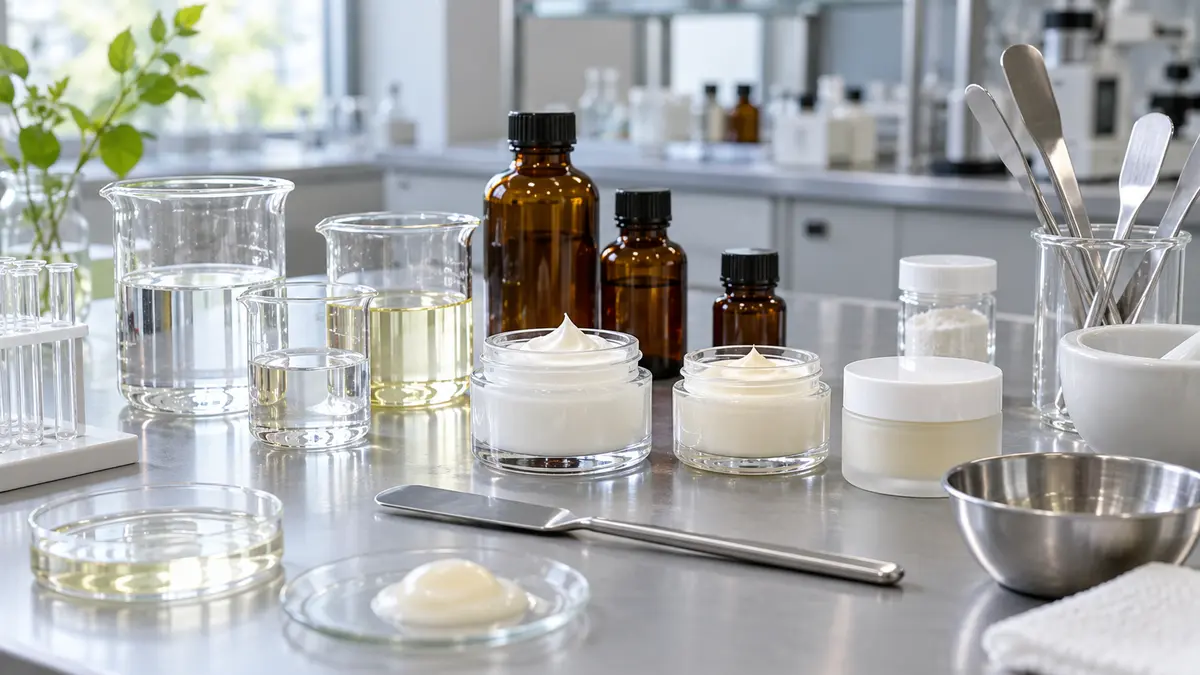
Arnest UniRus operated research centres in St. Petersburg, Yekaterinburg and Tula by December 2025. Its laboratory infrastructure included analytical, microbiological and fragrance facilities, alongside a centre studying skin and hair. The Kalina factory in Yekaterinburg carried out challenge tests examining how formulations resisted contamination after a product was opened. Ingredient research used cell models and trials conducted under medical supervision, according to the company’s marketing director.
University partners included Moscow State University, Skoltech and Sechenov University. Management described cooperation with over 40 educational institutions. Some innovation projects could move into implementation within six to twelve months, compared with earlier projects taking three to five years, the director said in December. Those periods described part of the development programme. The company’s premium-product work covered brands including Feel Moment, Crystal Purity, Repeat and BioCode, alongside the scientific and educational partnerships described by its management. Repeat used a questionnaire lasting about twenty minutes to collect information about skin and hair. The company described analyzing more than eighty parameters before an algorithm selected a combination of ingredients and concentrations for the proposed care system.

A longer research horizon
Arnest UniRus formed its Innovation Hub team in 2024, extending the expertise of its research and development department. The team worked across functions and planned research over a horizon of five years or more. In March 2026, its head described digital tools for ingredient and product development, process modelling and new laboratory-testing methods as areas of activity.
The company also maintained laboratories for formulations, packaging and fragrance. Its skin-and-hair assessment centre had operated since 2020. A pilot project with the medical-technology startup Albogen began in 2024; that partner used deep machine learning in molecule development and supported design, synthesis and research stages. The hub’s manager described collaboration with more than 20 scientific organizations. This was a research-partner count, separate from the educational-institution network described by marketing management. The team combined domestic scientific meetings with international ingredient, packaging and finished-product exhibitions. Examples included In-cosmetics and PCHI for raw materials, and CIBE and Cosmoprof for the wider cosmetics industry. Its fragrance work involved in-house perfumers, drawing on professional experience extending beyond thirty years, according to the hub’s manager.

A product-development agreement
Arnest UniRus and the Institute of Plastic Surgery and Cosmetology signed a cooperation agreement on October 20, 2025. The partnership concerned development and market introduction of the BioCode cosmetics range. The institute announced the agreement the following day. Its scope brought together the manufacturer’s product-development capabilities and the institute’s expertise in aesthetic medicine.
The proposed programme included joint research initiatives and development of products addressing market requirements. The partners described a daily facial-care system covering cleansing, daytime and night-time creams, sun protection and age-related skincare. BioCode’s range therefore involved several product formats and steps within a care routine. The agreement concerned collaboration on that range; the announcement also presented the partners’ own explanations of the brand’s technology and intended effects. The planned cooperation paired joint research with work on a commercial assortment. The institute named BioCode’s Biomenta+ technology in its description, linking it with plant-derived extracts and peptides used within the partners’ product concept.

Certification for particular products
Roskachestvo’s halal certification body issued a certificate for a range of Lesnoy Balsam toothpastes in November 2025. The certificate was entered in the Federal Accreditation Service’s information system. Roskachestvo identified this as the first cosmetics range certified by an accredited halal certification body in Russia. The certified range comprised toothpastes; the manufacturer also operated across other cosmetics, hygiene products and household chemicals.
The certification process covered ingredients and their origins as well as manufacturing conditions. Its scope included storage, cleaning and separation of production lines, prevention of cross-contamination, packaging and logistics. Document examination, a production audit and laboratory testing of product samples formed part of the procedure. These checks added a product-specific certification process to the company’s existing formulation and manufacturing work.

Foodservice products
Arnest UniRus announced halal certification for selected Knorr Professional products in October 2025. The selection included beef, chicken, vegetable and mushroom stocks, together with products in the brand’s Real Stocks range. A new lamb stock was designated as the first product whose packaging would carry the halal mark. The company presented the certification as part of its response to differing customer expectations.
Knorr Professional’s lamb stock was a dry mix developed for professional kitchens in the hotel, restaurant and catering market. Its format supplied a stock ingredient for chefs preparing dishes, rather than a ready-to-eat retail meal. The certified selection spanned several stock varieties within that professional range. The company’s food-marketing team linked the work with consumer values, traditions and ways of life, alongside the range’s positioning for professional kitchens.

Selected plant-based soups
Four Knorr ready-made puréed soups received Roskachestvo Vegan certification in a company announcement published in January 2026. The named products were sterilized gazpacho, vegetable, pumpkin and lentil soups. The certification covered those products within the assortment. Arnest UniRus associated the work with consumer interest in foods made without animal-derived components.
- Gazpacho puréed soup.
- Vegetable puréed soup.
- Pumpkin puréed soup.
- Lentil puréed soup.
Certified manufacturers could use the approved plant-based-product mark on their qualifying products. Roskachestvo’s plant-based-products competence centre worked on standards, market infrastructure and support for producers. The company’s January announcement connected its own selected soup range with that voluntary certification framework. It did not describe every Knorr product as vegan or extend the soup certificates to the separately announced professional stocks.

Managing product information
Arnest UniRus began implementing Referus PLM in October 2025, according to an April 2026 account by the system’s developer, Solutions for the Future. The software created a centralized collection of product data and coordinated work across research and development, quality and purchasing. The developer reported that initial implementation released 15% of technologists’ working time through reduced manual operations and quicker approval of changes.
Product lifecycle management covered information from an initial idea through withdrawal from production. The developer’s model brought ingredient, formulation, experiment and test-result records into a structured repository, with access according to an employee’s role. For a consumer-goods business, these records supported work on recipes, substitutions and changing product requirements. The implementation account described a common information base serving several departments, with the reported time saving attributed to the developer. Its description distinguished product knowledge from enterprise resource planning: the latter handled resources, finance and logistics, while the product-lifecycle system organized information about product identity, manufacture and changes.
The software business
Solutions for the Future joined RUSSOFT following the association’s November 2025 board meeting. Established in 2023, the software company specialized in enterprise product-lifecycle systems and digitalization of manufacturing businesses. RUSSOFT identified Referus as its flagship product and described customers in consumer goods, chemicals and food manufacturing. Its activities also included services and cloud solutions.
Choosing digital projects
Arnest UniRus’s digital management programme brought technology resources into one transformation office, according to a company presentation reported in August 2026. An architectural committee managed the wider systems environment. The company also developed its own product-lifecycle software and built a corporate data warehouse. Its immediate data-management priority was data quality, with digital leaders in business functions maintaining contact between the centralized team and operational users.
Projects were assessed against strategy, financial effect, business readiness and feasibility. The finance department reviewed results through investment committees, comparing conditions before and after implementation. Management reported more than RUB500 million of profit impact from the resulting project portfolio. Named projects covered demand forecasting, promotional effectiveness, availability in outlets, shopper segmentation and customer profitability. The company also described more than 40 artificial-intelligence workshops reaching over 700 people, alongside technical work on models within its internal environment. A digital-transformation academy had started in 2024. Management reported a twenty-percent increase in its employee digital-skills index in 2025. Project proposals came from interviews with board members, analysis of decisions within business functions and workshops addressing users’ operational requirements.
Developing an organic-certification route
Arnest UniRus and Roskachestvo signed an agreement on dialogue about environmental certification of cosmetics on June 5, 2025. The agreement was concluded during the sixteenth International Ecology Forum. The manufacturer intended to assess products against a draft national standard for organic cosmetics that was still being developed at the time.
The parties expressed readiness to conclude a certification-services contract after the relevant standard had been adopted and entered into force. Chistaya Liniya was envisaged as the company’s first brand to undergo the procedure. The agreement also allowed for inspection at production sites following successful certification. The signatories represented Roskachestvo’s management and the manufacturer’s corporate-affairs and sustainable-development function. Their document therefore concerned both the proposed assessment of products and arrangements for the certification relationship. This was a proposed route toward assessment under a developing standard, with the subsequent certification contract and inspections dependent on the conditions set out in the agreement.
A project on drained peatland
The company’s environmental programme included a partnership to restore moisture to part of the Orshinsky Mokh peatland in the Tver region. The project involved the Centre for Sustainable Development Technologies and Tver State Technical University. Its stated area was 1,200 hectares within the much larger peatland. The work sought to retain precipitation and recreate wetter conditions on land previously drained for peat extraction. The company began implementing the project under the national methodology in 2023. Its partners described reduced fire risk and recovery of habitats for plants, birds and other animals among the anticipated additional effects.
The project used a national methodology for rewetting drained temperate peatlands developed at the Institute of Global Climate and Ecology. Registration in the carbon-unit register took place on January 9, 2025. The project partners forecast a cumulative reduction of 170,419 tonnes of carbon-dioxide equivalent during the first ten years. Their project account anticipated initial emissions-reduction results in 2026 and explicitly linked the eventual effect to natural conditions. The figure was a forecast for the project period.
A brand partnership at Lake Baikal
Chistaya Liniya also partnered with the Lake Baikal Foundation and the Pyaterochka retail chain on a separate conservation project announced on July 22, 2025. The work concerned the Chivyrkuisky Isthmus in Zabaikalsky National Park, Buryatia. The foundation’s programme combined visitor infrastructure, research and public information, addressing pressure on vulnerable sandy habitats.
Plans included two nature trails, two observation platforms and binoculars for birdwatching. Researchers would survey protected plants, map their distribution and examine invasive species. Information boards, a film, a photographic exhibition and a roundtable formed the educational programme. The protected-area administration participated, while the Institute of General and Experimental Biology of the Siberian Branch of the Russian Academy of Sciences was assigned the scientific work. The announcement described the programme to be undertaken by the partnership. The isthmus contains wetland, forest and sandy ecosystems. Existing protection rules restricted parking, camping and collection of berries and herbs in its quiet zone. The foundation identified continued unauthorized access and trampling of dune vegetation among the pressures the project sought to address.
A later export-facing exhibition
Arnest UniRus subsequently planned to present Russian cosmetics brands at the first INNOPROM exhibition in Saudi Arabia in February 2026. An organizer’s notice identified a company stand and a February 9 discussion covering the Saudi consumer-goods market, product quality and labelling requirements. The exhibition took place in Riyadh from February 8 to 10.
The company’s presentation covered personal care, home care, ice cream, food and supplements, and highlighted BioCode’s development with the Moscow institute. The notice placed product development alongside the company’s effort to introduce its brands to another market. Its manufacturing profile listed six sites, including supplements production in Biysk, alongside the personal-care, home-care, ice-cream and food operations. This was the company profile accompanying the later exhibition, a separate dated context from the four manufacturing clusters described in April 2025. It described exhibition participation and discussion topics, rather than reporting export contracts or sales achieved at the event.





Leave a comment